Lineage Evidence
This page summarizes the main reasons descendants identify Shaykh Sulaiman as a Sayyid, a descendant of Sayyida Fatima (RA), the daughter of the Prophet Muhammad (peace be upon him).
The aim here is not to rely on a single source, but to show how several lines of evidence support one another.
Main Points
-
Family scrolls
The Worcester line preserves an Arabic sanad tracing the family lineage, with an English translation also available on this site. -
Parallel family memory
A second scroll and related family traditions in other branches support the same broad lineage claim. -
Oral tradition across family lines
Descendants from different branches preserved related accounts independently, including the family's connection to Ahmad ibn Ali al-Rifa'i. -
Letter from Madinah
A letter from Sayed Ghazi Bhafaqih to Sietie Salama Bhyat (nee Sadan) in the 1960s affirmed the family's connection to Madinah and its Sayyid heritage. -
DNA evidence
DNA testing confirmed shared paternal ancestry across descendants from the Worcester, Wynberg, and Claremont lines. -
Archival documentation
Official records identify Shaykh Sulaiman under forms such as Sheikh Sulaiman Abdurahmaan and Sheikh Sulaiman van Arabia, and death notices of his sons identify him as their father.
Family Scrolls
The Worcester scroll traces the lineage through 60 generations, ending with Sheikh Sulayman Abd al-Rahman. The existence of a preserved sanad, together with family testimony around it, remains one of the most important pieces of evidence on this site.
Oral Tradition
Across Worcester, Claremont, and Wynberg, elders consistently preserved the claim that the family descended from the Prophet's family and that Shaykh Sulaiman came from the Hijaz. These oral accounts were preserved separately, which gives them additional weight when they align with written and scientific evidence.
One important oral account comes from Hadjie Salma Jacobs (nee Sadan), who preserved stories about Imam Sadan and about Shaykh Sulaiman's exile from Makkah.
The Bhyat Family Letter
One especially important family record is the letter connected to Sietie Salama Bhyat (nee Sadan). In family research, this letter from Sayed Ghazi Bhafaqih in Madinah is treated as a significant confirmation of the family's Hijazi and Sayyid roots. It remains part of the wider body of evidence because it supports what descendants had already preserved through oral tradition and inherited family records.
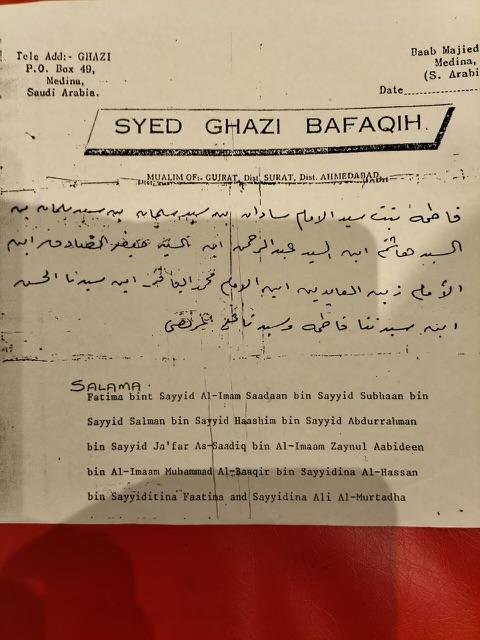 Sayed Ghazi Bhafaqih of Madinah, whose letter to the Bhyat family is part of the evidence preserved in family research.
DNA Evidence
DNA testing across descendants of the Sadan/Sedan, Slamang, and related families confirmed a shared male ancestor consistent with the early 1800s.
The specific descendant lines highlighted in family research are:
- Anver Sedan
- Kausiem Slamang
- Nathmie Slamang
Together, these tests support the claim that the three branches share a common paternal origin consistent with the family tradition around Shaykh Sulaiman.
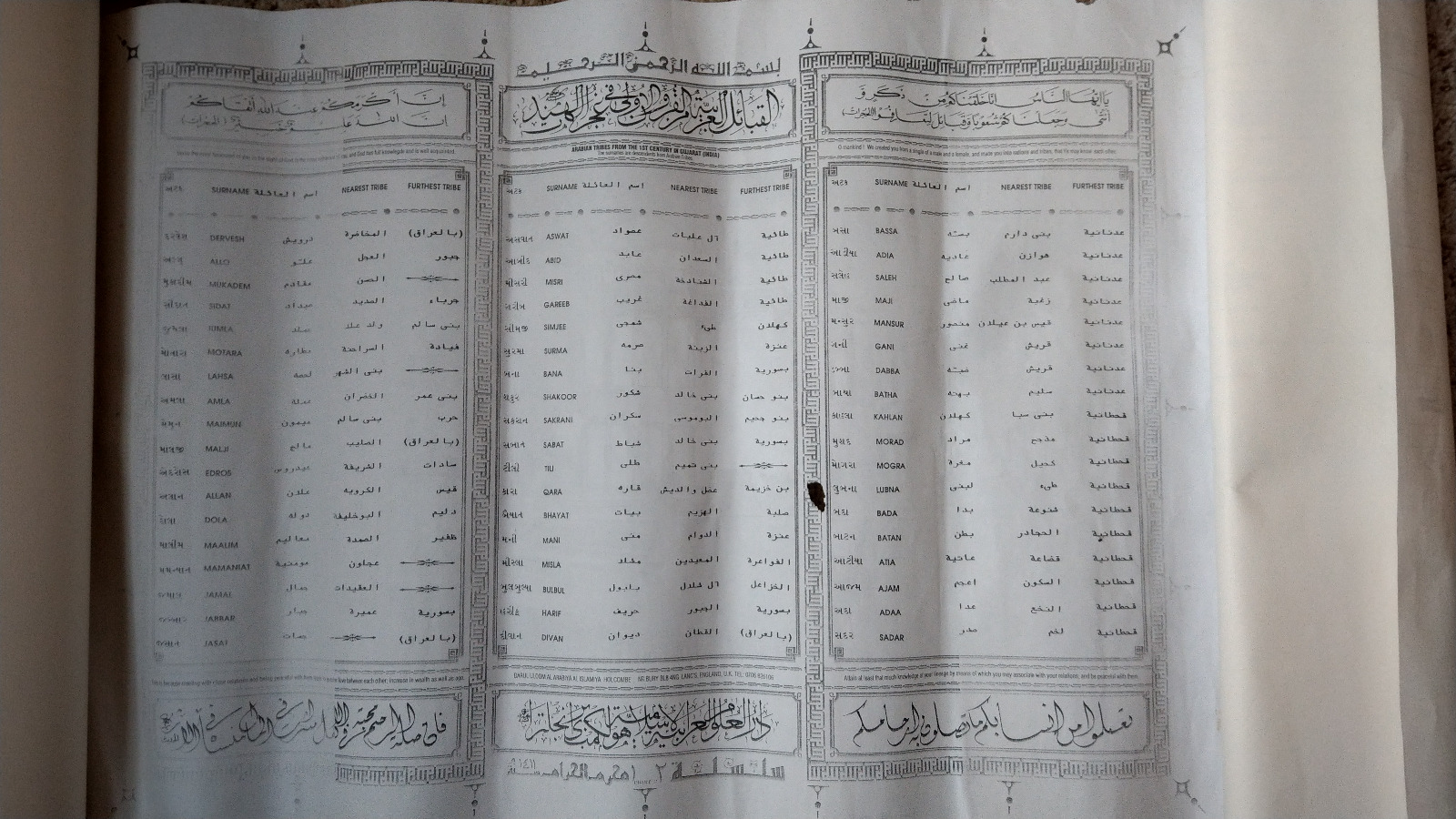 Book reference showing the surname "Aswat" linked to the family of Ali (RA).
Why the Evidence Matters
No single piece of material stands alone. The strength of the case lies in how the evidence fits together:
- inherited scrolls
- oral memory across branches
- archival records
- later DNA confirmation
Taken together, these form the basis for the family's understanding of Shaykh Sulaiman's lineage and status.